
The Hidden Benefits of Routine for Seniors with Memory Loss
For a senior living with Alzheimer’s or another form of dementia, the world can feel like a kaleidoscope—constantly shifting, unpredictable, and often frightening. When the brain can no longer rely on short-term memory to navigate the day, it looks for "anchors" in the environment to feel safe.
This is the power of routine. At Vitality Health Care, our Dementia Care Specialists don't just provide tasks; they provide structure. Here is why a predictable daily rhythm is the most effective "non-medical" treatment for memory loss.
1. Reducing Anxiety and Agitation
Imagine waking up and not knowing where you are or what is supposed to happen next. That uncertainty triggers the body’s "fight or flight" response, leading to the pacing, shadowing, or vocal outbursts common in middle-stage dementia.
The Routine Fix: When breakfast always happens at 8:30 AM in the same chair with the same blue mug, the brain recognizes the pattern even if the person can't name the time. Familiarity breeds a sense of safety, which naturally lowers cortisol levels and reduces agitation.

2. Managing "Sundowning"
As we discussed in our guide to Alzheimer’s support, "Sundowning" is the increased confusion that occurs as daylight fades.
The Routine Fix: A structured late-afternoon routine—dimming the lights at 4:00 PM, playing soft music, and engaging in a calming, repetitive activity (like folding laundry)—signals to the brain that it is time to wind down. This prevents the "spike" in anxiety that leads to difficult evenings.
3. Preserving "Functional" Independence
Dementia affects the brain's ability to plan complex steps (executive function). A routine turns complex tasks into "muscle memory."
The Routine Fix: If a Home Health Aide guides a senior through the same dressing routine every morning—laying out clothes in the same order—the senior can often participate in the task longer than if the process was randomized every day.
4. Improving Sleep Patterns
Sleep disturbances are a major hurdle for NJ families caring for a loved one at home. Dementia often flips the internal clock, leading to "day-night reversal."
The Routine Fix: A consistent wake-up time, regular meal intervals, and exposure to natural light in the morning help reset the circadian rhythm. Our aides ensure that "daytime is for doing," keeping seniors engaged so they are ready for restorative sleep at night.
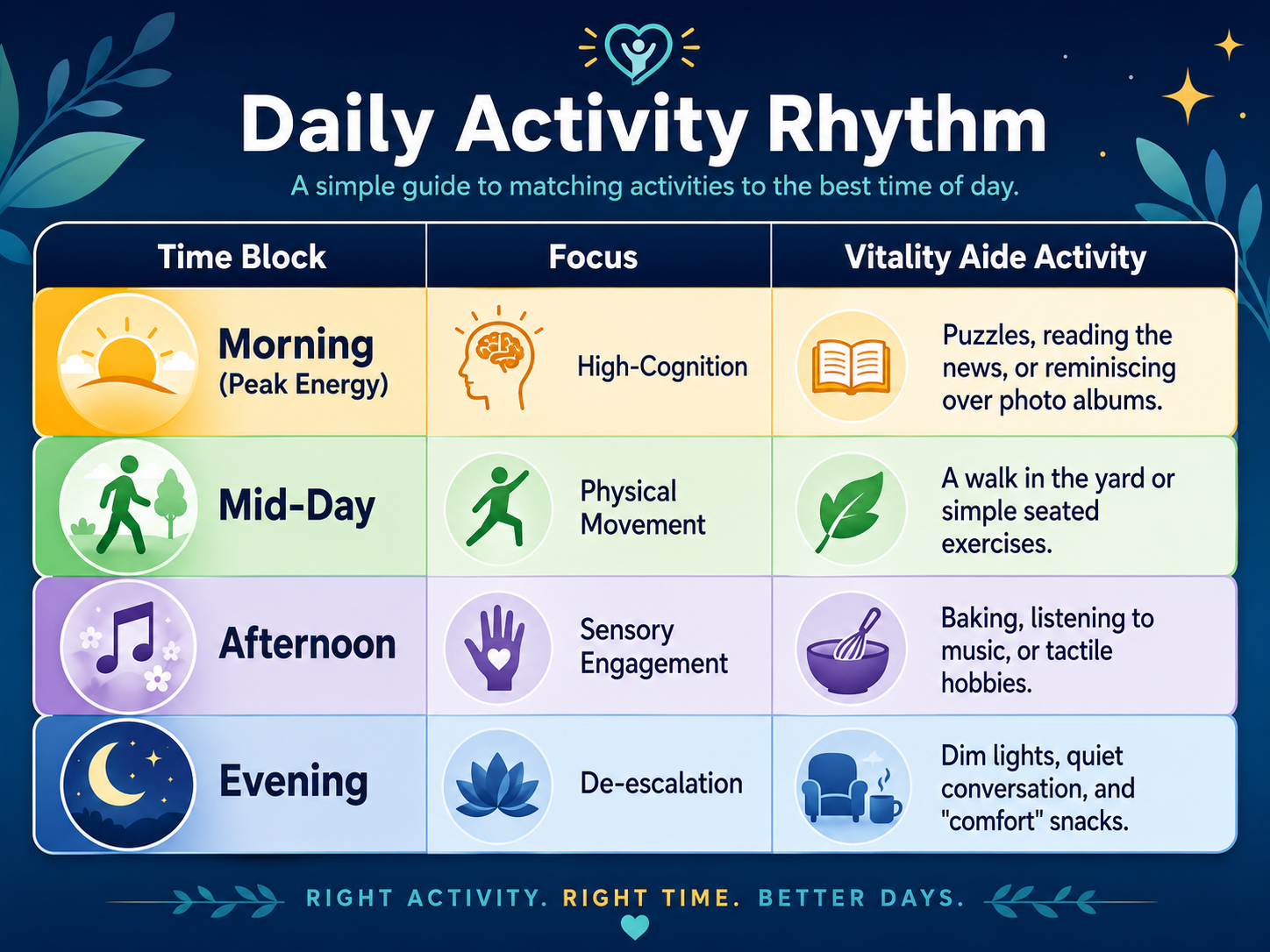
The "Anatomy" of a Successful Dementia Routine
A good routine isn't a rigid military schedule; it's a flexible flow that follows the senior's natural energy peaks.
5. Better Nutrition and Hydration
Seniors with memory loss often forget to eat or drink, which can lead to UTIs and sudden confusion.
The Routine Fix: By incorporating "hydration breaks" into the routine (e.g., a glass of water after every bathroom trip), an aide ensures the senior stays hydrated without it feeling like a medical requirement.
Conclusion: Routine is a Form of Respect
At Vitality Health Care, we serve families in Bergen, Essex, and Union Counties by bringing order to the chaos of memory loss. We understand that a routine isn't about control; it's about giving a senior the dignity of knowing what to expect in their own home.
Is Your Home Life Feeling Chaotic?
Our dementia-trained RNs can help you design a daily flow that restores peace to your household. Schedule Your Free Memory Care Consultation today and let us help you build a routine that fosters vitality.
