Caring for a Bedbound Loved One at Home: A Practical Guide for Families
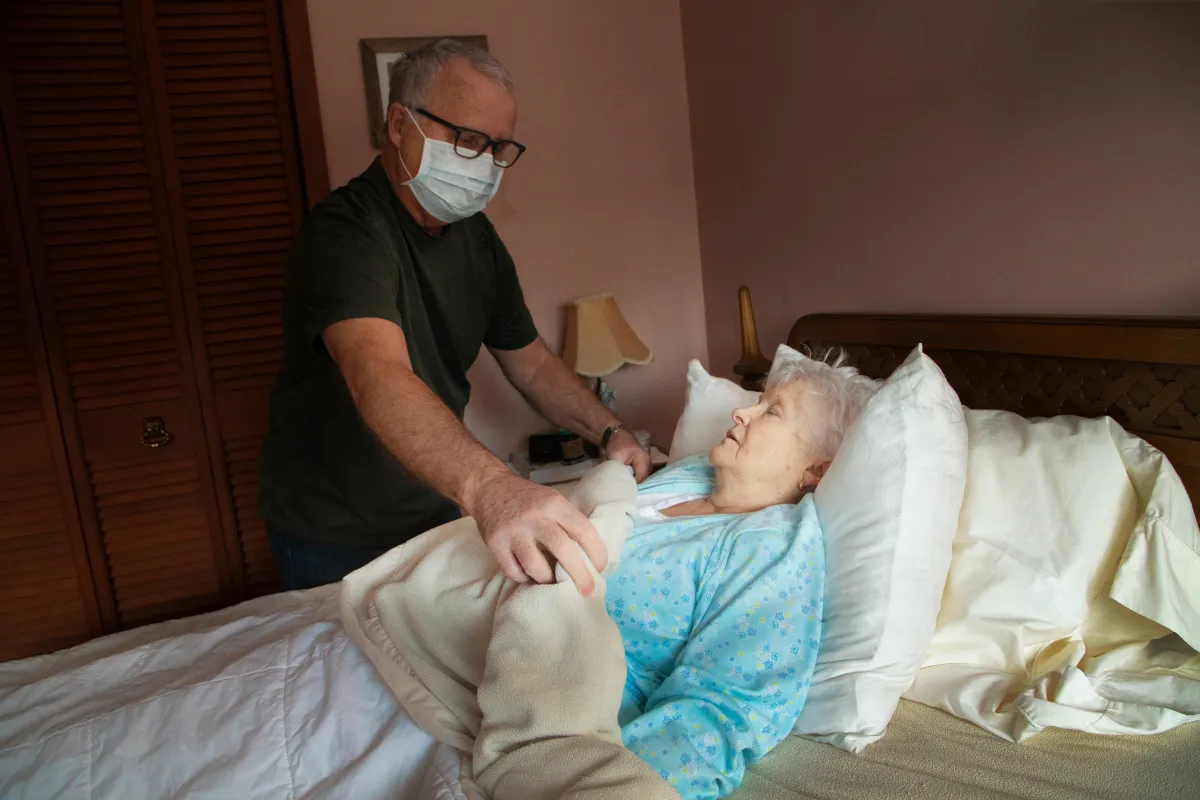
When a loved one becomes bedbound, the dynamics of caregiving shift from "assistance" to "total support." For families in New Jersey, this transition can be daunting. You aren't just managing a schedule; you are now responsible for their physical safety, skin integrity, and mental health 24 hours a day.
At Vitality Health Care, we believe that being bedbound shouldn’t mean a loss of dignity or quality of life. This guide provides the essential clinical and personal care strategies to keep your loved one safe, comfortable, and healthy at home.

1. Protecting Skin Integrity (Pressure Sore Prevention)
The greatest risk for a bedbound senior is the development of pressure ulcers (bedsores). In an immobile patient, these can develop in as little as two hours.
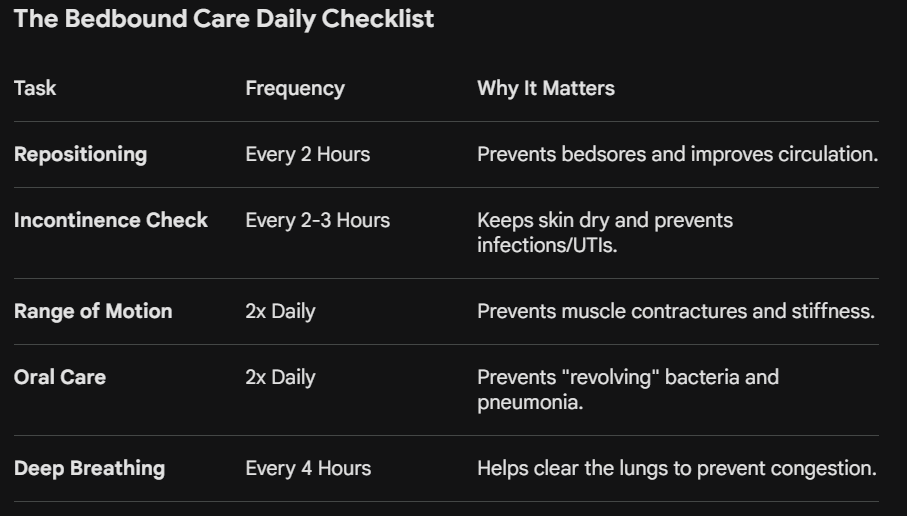
The 2-Hour Turn: You must reposition your loved one at least every two hours. Use a "turning schedule" to track positions (Left Side, Back, Right Side).
Skin Checks: Every time you turn them, inspect "bony" areas—the heels, tailbone, elbows, and back of the head—for any redness that doesn't disappear when pressed.
Keep it Dry: Moisture from perspiration or incontinence is a primary cause of skin breakdown. Use high-quality moisture barriers and change linens immediately if they become damp.
2. Proper Positioning and Body Mechanics
Safe positioning is vital not just for the patient but also for the caregiver’s back health.
The 30-Degree Rule: To prevent shearing (skin tearing) and reduce pressure on the tailbone, keep the head of the bed at or below 30 degrees, unless they are eating.
Supportive Aids: Use pillows or foam wedges to "float" the heels off the mattress and to keep knees and ankles from rubbing together.
Using a Hoyer Lift: If your loved one cannot assist with transfers, a mechanical Hoyer lift may be necessary for safe transfer to a chair or commode. (See our upcoming post on What is a Hoyer Lift? for more details.

3. Nutrition and Hydration
Being bedbound changes the body’s metabolism and digestion.
Aspiration Prevention: Never provide food or drink while a patient is lying flat. They should be upright at 90 degrees and remain upright for 30 minutes after eating.
Fiber and Fluids: Immobility often leads to severe constipation. Ensure their diet includes fiber-rich foods and that they drink water frequently throughout the day.
4. Mental and Emotional Vitality
The "four walls" of a bedroom can quickly lead to depression and sensory deprivation.
Environmental Stimuli: Position the bed near a window so they can observe changes in light and weather in your NJ neighborhood.
Active Engagement: Don't just leave the TV on. Read aloud, play their favorite music, or use a tablet for video calls with family.
Professional Companionship: A Certified Home Health Aide (CHHA) provides more than just physical care; they provide the social interaction that keeps the mind sharp.
When to Call the Nurse
If you are managing care in Bergen or Essex County, you should have a Skilled Nursing Service partner to oversee the plan. Call your Vitality RN immediately if you notice:
A red area on the skin that stays red after being turned.
Any cough, fever, or change in breathing.
Sudden confusion or increased lethargy.
Refusal to eat or drink for more than 12 hours.
Conclusion: You Are Not Alone in This
Caring for a bedbound loved one is a profound act of love, but it is too heavy a burden for one person to carry alone. Professional support doesn't just help the patient; it gives the caregiver the rest they need to remain healthy and present.
At Vitality Health Care, our aides and nurses are experts in the delicate art of bedbound care. We provide the physical strength and clinical expertise to ensure your loved one receives hospital-grade care in the comfort of their own bedroom.
Does Your Loved One Need a Care Assessment?
We provide free in-home assessments to help you set up a safe environment for your bedbound family member. [Schedule Your Free Home Care Consultation] today.
