
Home Health Care After Hip Replacement: Your Complete Recovery Guide
A total hip replacement is a "second chance" at mobility for many New Jersey seniors. While the surgery itself is a marvel of modern medicine, the success of the procedure depends entirely on what happens during the first six weeks at home.
In the fast-paced medical environment of Bergen County and Union County, hospitals often discharge patients within 24 to 48 hours. This leaves families with the daunting task of managing pain, physical therapy, and daily safety on their own.
At Vitality Health Care, we specialize in post-surgical recovery. This guide outlines the milestones of healing and how home health care after hip replacement ensures you reach them safely.
Phase 1: The First 72 Hours (The Critical Window)
The first few days at home are about one thing: Safety.
Pain Management: It is vital to stay "ahead of the pain." If you wait until the pain is severe to take medication, it becomes harder to engage in physical therapy.
Clot Prevention: Your doctor will prescribe blood thinners. An RN or LPN from Vitality can monitor for signs of Deep Vein Thrombosis (DVT), such as sudden swelling or redness in the calf.
The "Hip Precautions": Most surgeons provide strict rules—no crossing your legs, no bending your hip past 90 degrees, and no twisting your foot inward. Our aides are trained to reinforce these movements every time you move.
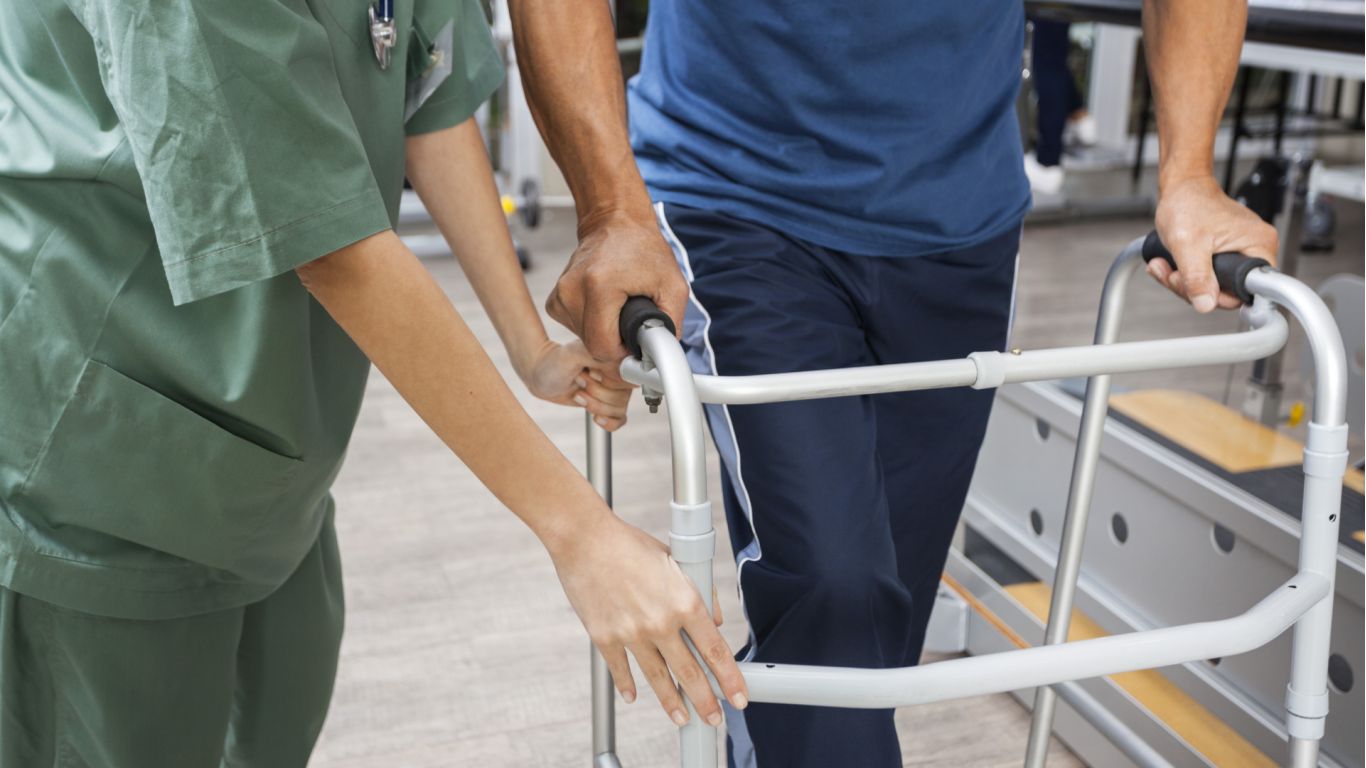
Phase 2: Weeks 1–3 (Restoring Movement)
During this phase, the focus shifts from "protection" to "progression."
Physical Therapy "Homework": Your PT will visit a few times a week, but the exercises must be done daily. Our Certified Home Health Aides (CHHAs) provide the encouragement and supervision needed to ensure exercises are done safely and correctly.
Incision Care: We monitor the surgical site for "red flag" symptoms like increased drainage, foul odor, or fever, ensuring a nurse is notified before an infection can escalate.
Phase 3: Weeks 4–6 (Regaining Independence)
By now, you are likely moving with a cane or walking independently, but the risk of a "setback" fall is still high.
Transitioning to Normalcy: We assist with the "Activities of Daily Living" that are still difficult, such as getting in and out of a car for follow-up appointments or safely navigating the stairs in your NJ home.
Energy Conservation: Recovering from major surgery is exhausting. We handle the meal prep and light housekeeping so you can focus your energy entirely on your rehabilitation.
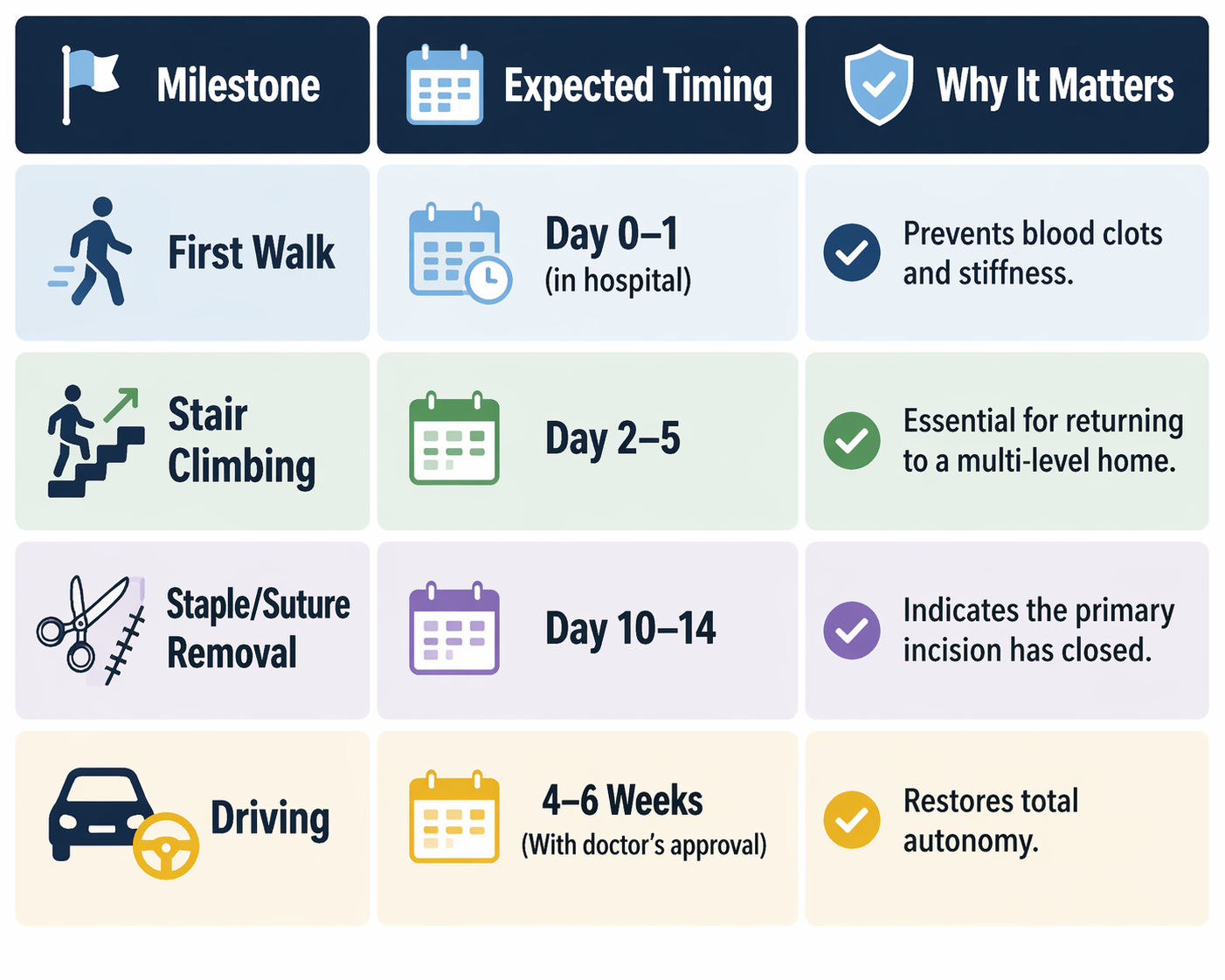
Recovery Milestone Tracker
Essential Home Modifications for Hip Recovery
Before you arrive home from the hospital, ensure your environment is "Hip-Proofed":
The "Firm" Chair: Avoid low, soft sofas. You need a firm chair with arms to help you push up to a standing position.
Raised Toilet Seat: Standard toilets are too low and violate the 90-degree hip precaution rule.
The "Clear Path": Remove all throw rugs and cords. A hip patient with a walker needs wide, unobstructed lanes.
Why Professional Post-Surgical Care Matters
A hip replacement is an investment in your future quality of life. Don't risk that investment by trying to "tough it out" alone. Professional post-hospital home health care reduces the risk of dislocation, prevents infection, and ensures you hit your physical therapy goals on schedule.
At Vitality Health Care, we provide a "seamless" transition from the hospital to your front door. Our team coordinates with your surgeon and physical therapist to provide a unified front for your recovery.
Is Your Home Ready for Your Return?
Don't wait until you're in the discharge lounge to make a plan. Schedule Your Free Post-Surgical Home Audit today. We’ll help you prepare your home and your care team so you can focus on healing.
